Synapse Construction is a full service building envelope construction company. We are committed to providing our clients the highest level of customer service and craftsmanship. Weather you need a multifamily re-clad or a single family window replacement we will exceed your expectations. Contact us today for a free siding inspection and proposal.

Artisan Siding Panel Installed on Bellevue Home

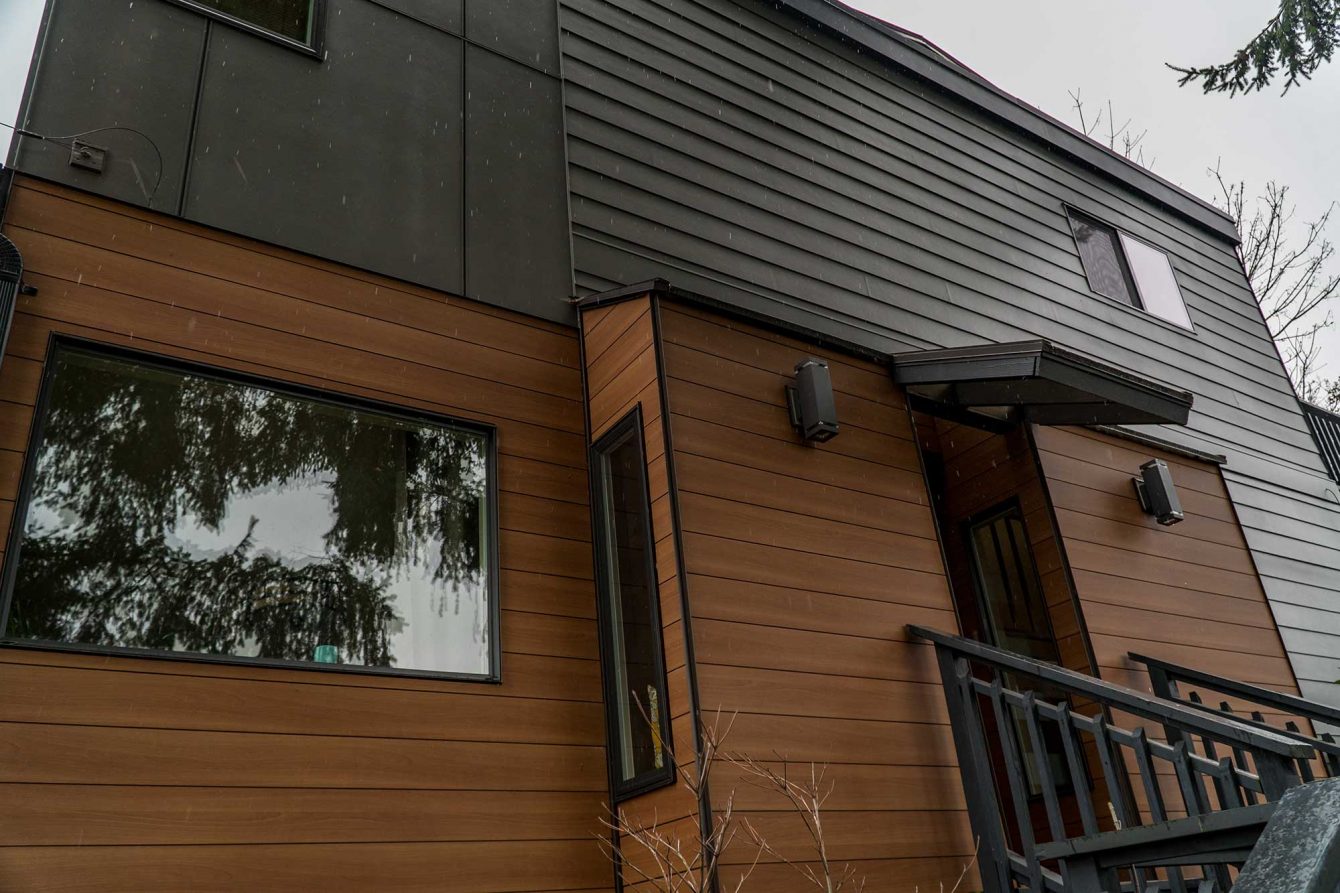
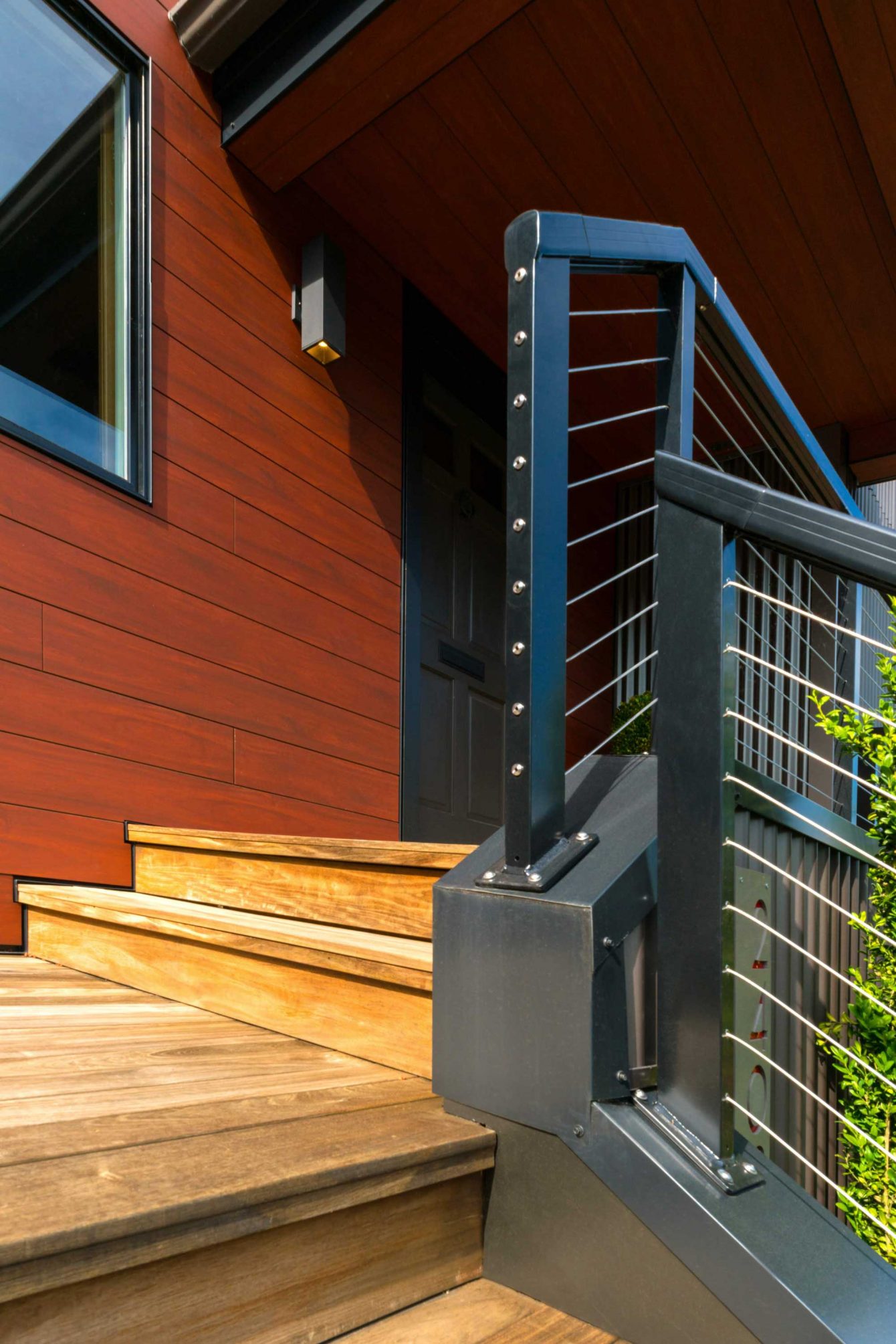
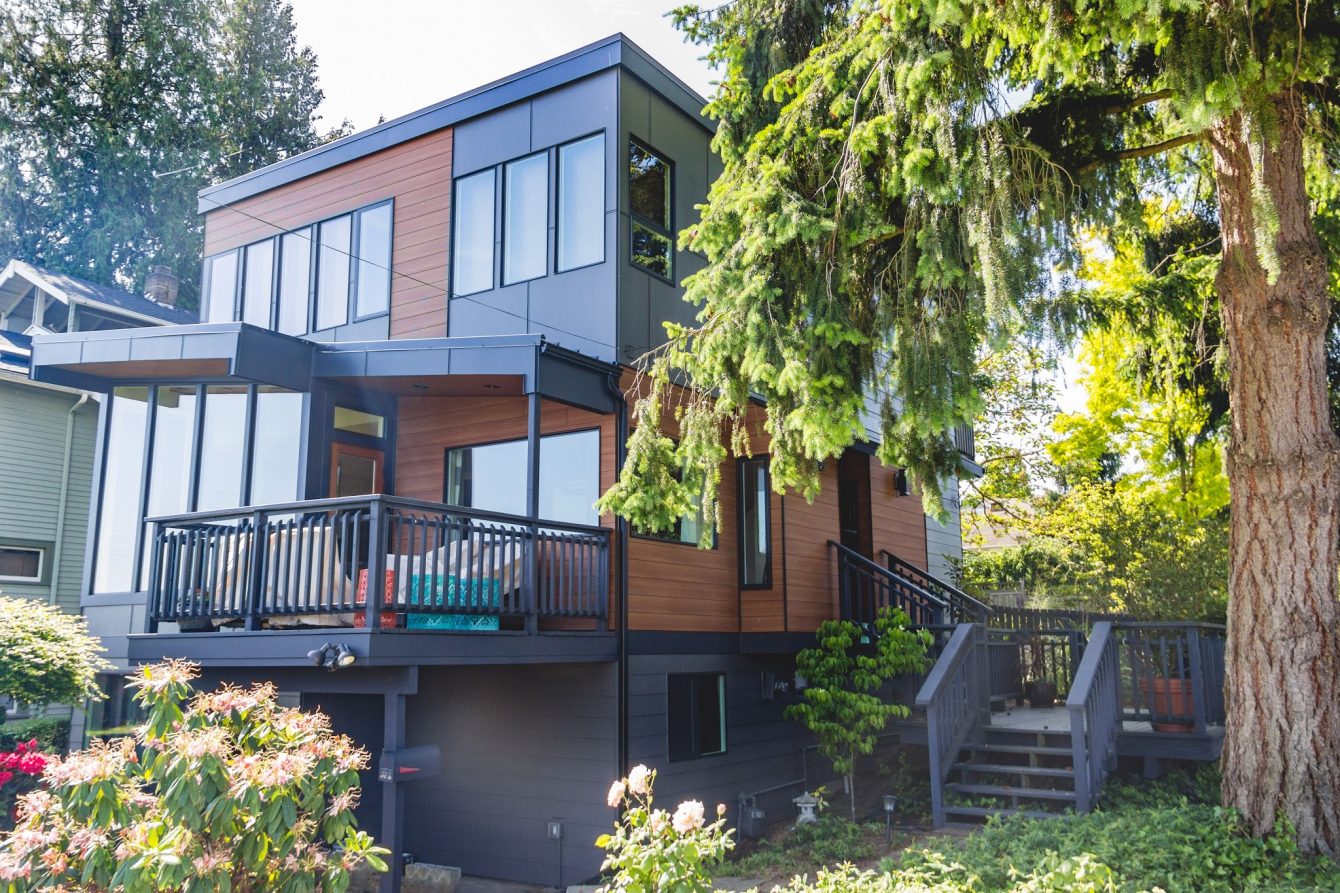
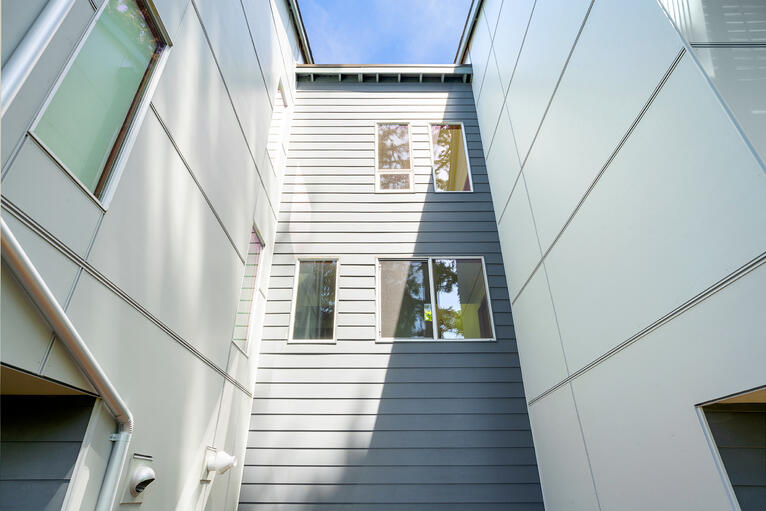
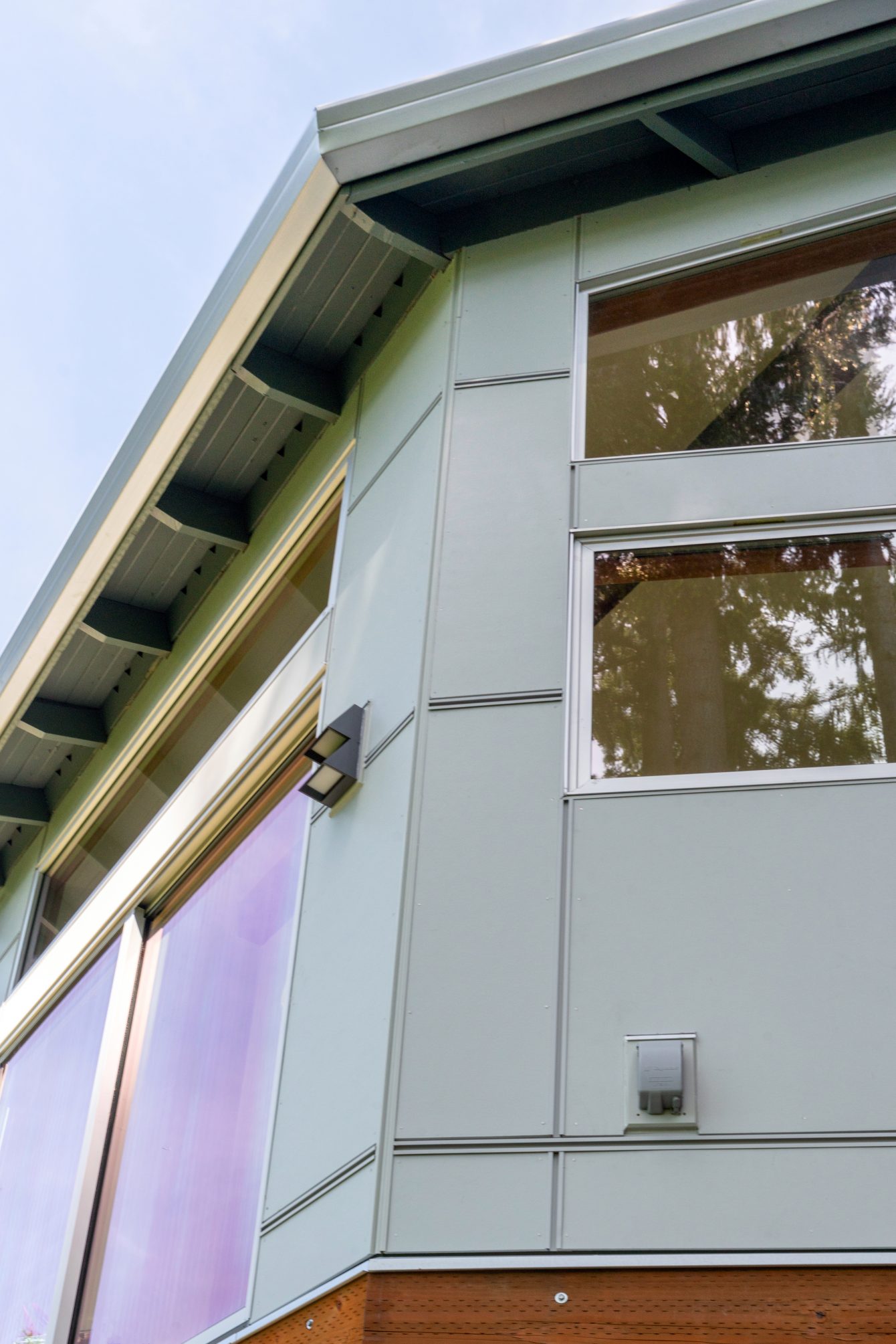
Bellevue, WA James Hardie Artisan Panel Siding project.Synapse construction was recently contracted to provide siding services for a home remodel in Bellevue, WA.  The owner decided re-side his residence using James Hardie, Artisan panels.

The main difference from the standard hardie panel is the artisan is twice as thick and utilizes a tongue and groove connection at the butt joints.  The added thickness gives a more traditional or wood siding look.

The draw back to the artisan is it’s weight.  Because it’s twice as thick it is also twice as heavy which slows down installation a little.  Also because of the thickness of the artisan siding material, thicker trim material must be used (ie:  corner batts, window trim, belly bands, etc).  Traditional brick molding used around doors is not as thick as would be desirable to accommodate the thicker siding.  This problem can be solved by extending the door jamb 1/4″ or so and padding out the brick mold with 1/4″ material.

The Hardie Artisan siding does provide a more traditional and substantial look over standard Hardi panels.  The wood grain texture matches up well with the t & g butt joint connections.  However upon close inspections it is evident that it is a wood substitute.  The Hardie Artisan panel siding is also quite a bit more expensive than the standard hardie Bellevue - Residential siding project, cement panelspanels.

All in all the owner of the house that Synapse Construction is installing the James Hardie Artisan Panel siding on is pleased with the look.  For home owners that have specific aesthetic sensibilities about their horizontal siding may find the increase in cost worth the more substantive look.

I will be posting finished pictures of this project shortly.  Stay tuned…

Categories : Uncategorized
Comments View Comments

Most homeowners are careful when spending money improving their homes. They want to get the best return on their investment. Whether you’re working to increase the resale value of a home you want to sell or you plan to stay put in your current home indefinitely, there are a number of improvements that can be made. But how do you choose? A home is generally a person’s largest investment, so saving money in and on your home is a great first step to avoid throwing money out the window!  With the federal tax credits there hasn’t been a better time to replace your windows with new energy efficient windows.  Not every window has the qualities to qualify for the federal rebate so make sure your supplier knows if that is a criteria for your replacement window package.

Consider Replacement Windows

Upgrading old windows with new replacement windows is a great home improvement option. Windows are one of the most important areas in your home for energy conservation. A bad window is like having a big hole in your wall that lets the heat out and the cold in. Older windows can often be worn out, leak air, and not function or operate well. Replacement windows can solve any or all of these problems.

Some of the most important areas in your home for energy conservation are your windows. Evaluating what you have in place will help as you decide how and when to install replacement windows. Older windows are often single paned which doesn’t help contain energy in your home. They leak air and don’t provide a good protective barrier to the heat and cold that’s outside your home. They let in the cold and out the heat in the winter and the other way around in the warmer months. Replacing single pane windows will make your home more energy efficient because new windows are more energy efficient. They prevent air leaks and are more durable than older single pane windows. They are also low maintenance, and are easier to operate than the windows installed in the home when it was new.

Choosing the Right Replacement Windows

A wide array of window materials is available for your home. Here are some of the more common window materials and feature choices.

  • Vinyl Windows

Vinyl windows are low maintenance and low cost. They are very common but don’t come in a huge range of colors.

  • Composite Windows

Composite replacement windows are stronger than vinyl as well as being lighter and more stable. Composite materials aren’t as vulnerable to heat and cold as vinyl and won’t twist or warp. They also retain their shape and color, resisting denting and fading, offering long-term durability.

  • Aluminum Frames

New aluminum frames are “thermally broken”.  Unlike the older frames that are not thermally broken new aluminum sash windows do not “sweat”.  Although aluminum is not as energy efficient of a frame it offers great durability, low maintenance and can lend itself to a more modern look.

  • Wood Frames

Wood is thought to be the most beautiful window frame material. They do, however, require more maintenance in that they need to be painted or stained periodically. They are also more expensive than vinyl, composite or aluminum. Some manufacturers will encase the wood in a composite material that maintains the look and feel of the wood while reducing the maintenance.

Know Your Glass!

Buying new windows can be confusing enough without having to worry about the technicalities of the glass and how it works. There is some basic information you should know, however, about the types of glass available for replacement windows that will give you the most for your money when trying to conserve energy.

  • U-value

U-value measures how insulating windows are. The more insulating the window is the lower the U-Value, making it more effective at keeping out the cold and heat and therefore making it more energy efficient.

  • Low-E

Low-E, or Low Emissivity, is glass that is coated with a glaze that reduces the heat transfer back through the glass. This helps keep warm air in during cold weather and hot air out during the warmer seasons. This will improve the thermal performance of the replacement windows you choose.

  • Gas Fills

Energy efficient replacement windows are generally either double or triple paned, meaning two or three pieces of glass sandwiched together. These windows have gas between the panes to increase thermal performance, making them more energy efficient. There are two types of gases used for this, argon and krypton. Krypton is more expensive than argon but is more effective at resisting heat flow than argon.

  • Performance Ratings

One performance rating for replacement windows is called the U-Factor. This indicates how much non-solar heat can pass through the glass. The lower the U-Factor is, the more energy efficient the window.

Finally, air leakage is another way of measuring the energy efficiency of replacement windows. This is a measurement of how much air can leak through a window. The lower the air leakage rating the more efficient the replacement window is.

What’s the Next Step?

Once you decide to install replacement windows in your home, it’s time to hire a good window contractor. They can take you through the process from pricing to installation. And they can show you a variety of choices that will work for your project. Replacement windows are available in a huge assortment of materials and styles. From a small bathroom window to a beautiful bay window, there is a replacement window for any room.

Replacement windows can improve the overall appearance of your home and will make your home more energy efficient. So stop throwing money out the window! Invest in replacement windows for your home.

Categories : Uncategorized
Comments View Comments
Feb
14

Sub Contractors

By Kekeever · Comments View Comments

Seattle General Contractors rely on experienced sub contractors.

site work subThe most successful Washington general contractors rely on their sub contractors to get the job done right.  Whether it’s a building envelope remediation project or a small residential addition/remodel, quality subs are an important part of contracting and building.

Identifying quality sub contractors can be tricky at first.  Until you have completed a project with them it will be hard to know how much trust you can place in them.  Checking references and inspecting past work is a step in the right direction.  Once you have a quality sub you want to make sure you treat them with respect to retain the relationship between them and your general contracting construction company.

You do this by defining the work clearly so the sub contractor has a clear idea of the scope of work.  This benefits in two ways:  1) Changes in the scope will be easily identified, and 2)  when the scope is clear pricing will be more sub contractor agreement imgcompetitive.  Having a clear written sub contractor agreement is also important.  It should clearly define the terms of the business to business relationship.  A well written master agreement should protect the general contractor, the sub contractor as well as the client or owner.

dollar signOf course paying your subs on time is important in keeping them interested in providing quality work on your commercial or residential building services projects. Retaining and managing project funds carefully to incentivise timely completion is important as well.

Not all sub contractors are created equal.  There are subs that are uniquely suited for residential building.  There are subs that are uniquely suited for commercial building services.  The trick is matching the right sub with the right project.

Categories : Uncategorized
Comments View Comments

Categories : Uncategorized
Comments View Comments

the northwest is a wet placeEveryone knows Seattle and the Puget Sound Region can be a very wet environment.  The siding used for residential building and commercial building envelopes are of paramount importance to the longevity of the building.  There are many different styles, materials and systems that can be deployed successfully to give owners the look they want and the protection they need.  A good way to get a feel for the different siding systems is to tour the siding Seattle has to offer in it’s many architecturally diverse neighborhoods.  I will speak to some of the options available below.  This article will stick to traditional siding systems and will not go into the rain screen systems like those made by Ceraclad and other manufactures.

Probably the most ubiquitous siding in the Seattle / Puget Sound Region is horizontal plank siding.  This is also known as clap board siding.  Much of this siding is madeFiber cement plank siding seattle from cedar.  Cedar is a great exterior wood product in that it is naturally resistant to rot and pests.  When sustainably harvested cedar can be a good green optionFiber cement siding is another horizontal siding product that has replaced the use of cedar over the last several years.  Some of the advantages of Fiber Cement plank siding are:  low cost, material is stable (not prone to cupping or warping like wood), accepts paint well and very durable.  Fiber cement is very popular for larger projects in that the durability of the material lends itself to lower commercial building maintenance.

cedar shake shingle sidingAnother wood siding material that is seen in our area is sidewall shingle siding.  Just as with the plank siding there are material options for shingle siding.  Cedar wood shingles are probably the most common.  There are different grades of wood shingles that can be used.  The grade of the shingles determines the cost, application and look of the siding.  Shingles can also be purchased as fiber cement which has the same advantages I illuminated in the previous paragraph.  Probably the biggest reason to use  wood shingle siding is when you want the natural wood look and are using a stain rather than paint for your finish.

board and batten sidingThere are also several vertical siding options.  Board and batten and channel siding are classic vertical siding systems.  Board and batten consists of 8-11″ wide planks applied to the wall vertically with smaller (1.5″-3.5″) battens applied at the joints.  Channel siding is a milled wood product that is applied vertically on the wall.  Each piece overlaps the one before it and because of the profile milled into the cedar there is a vertical channel created.  There are fiber cement siding options for these systems as well.

This is by no means a complete list of siding options but some of the more traditional systems you’ll see while looking at siding in Seattle.  Some other materials that I will discuss in future posts are: EIFS, stucco, metal, fiber cement panels (ie: hardie panel) and whatever else catches my eye between now and then.  Of course all of these systems can be mixed and matched to create a rich exterior texture for any given building.

Categories : Uncategorized
Comments View Comments

Simple and eye catching.

I’ve seen this look before but usually on commercial buildings.  I was struck by the look of this new house as I walked out of a coffee shop meeting in Seattle. There are some obvious benefits to this system.    New aesthetic possibilities, low maintenance and the ability to breath like a skin.

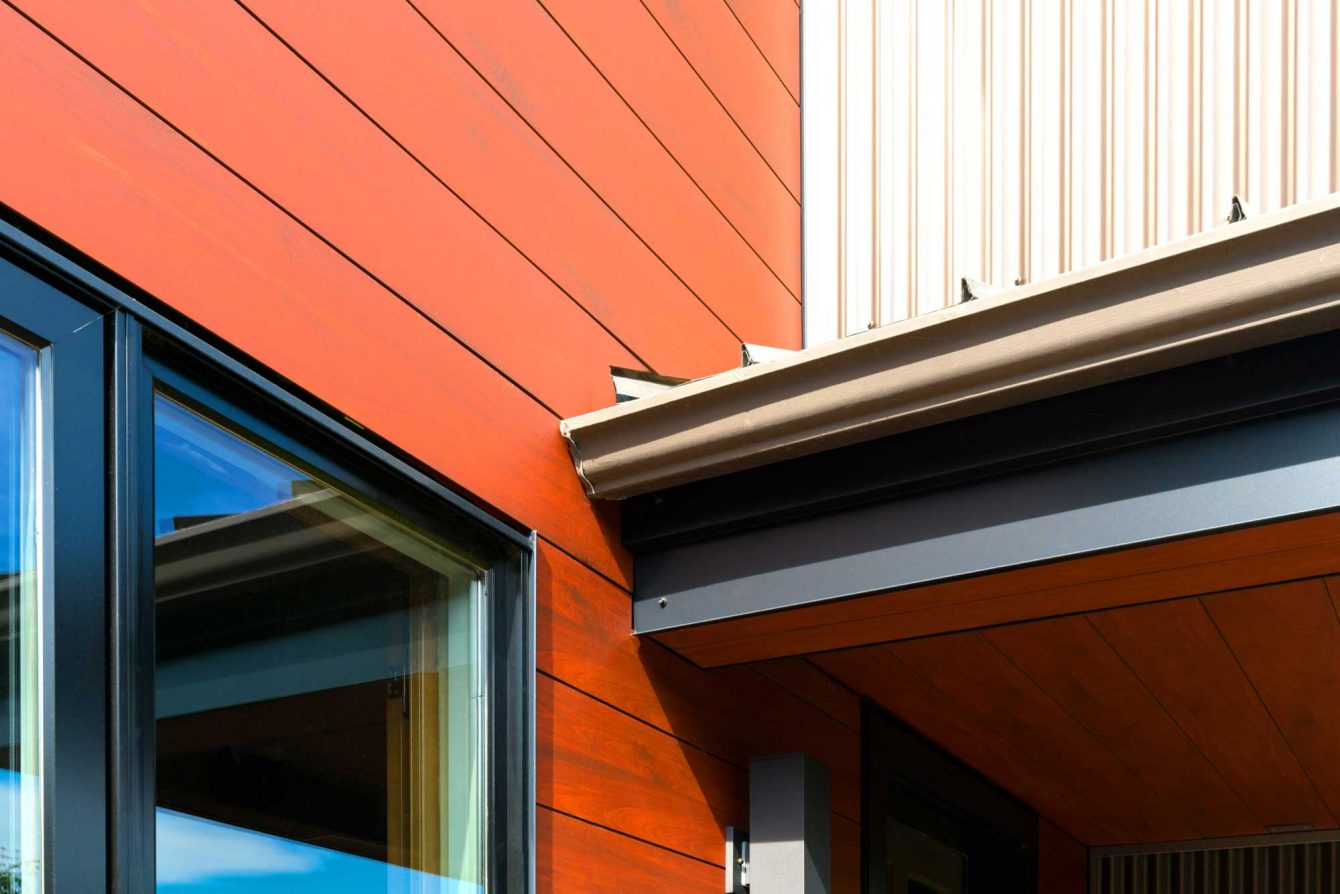
This house exemplifies the possibilities that exist with using a rain screen siding system.  From a distance the house looks like any other house with horizontal siding.  As you get closer you notice the shadow lines that are the gaps between the siding planks.  You will also notice the corner detail is not your typical corner batten but a piece of galvanized flashing.  There are many ways to use the rain screen system to develop different siding looks.

The siding system on the house pictured is a “rain screen” system.  It consists of weather resistant barrier (WRB) applied over the wall sheathing, vertical furring strips (typically 1/2″-3/4″ thick) and pre colored horizontal cement plank siding.  Using the pre-colored siding makes for a faster installation and lends itself to lower maintenance as factory paint is usually more robust than those applied on site.

rain screen corner flashing close upThe rain screen system also allows the building envelope to “breath”.  Since the system is relatively open water can not get trapped and is allowed to be eliminated naturally through drainage, evaporation etc.  The biggest problem in water intrusion events is the water can not escape and rot develops and insects move in causing damage.  With the rain screen cladding design a professional WRB installation is paramount to its effectiveness.

Siding can be done correctly or incorrectly as a traditional system or a rainscreen system.  Each system has its place as an appropriate building envelope depending on the project.  This house caught my eye because of the interesting textures at play on the exterior, the low maintenance implications of the design and the use of the rain screen design.

Categories : Uncategorized
Comments View Comments

Reuse can save $ and cost $, it depends.

recycle-logoIn these lean economic times reusing building components can help save money and the environment but there are a few things to think about first.  Will any savings of your reuse recycle efforts be offset by having to protect, augment or remove and reset those components.  Who’s responsibility is it  for warrantying those reused items?  Has your desire to recycle and reuse caused you to make concessions to some of the end results of your construction?

Many times when an item is designated in a construction project to be saved and reused that item becomes one of the most expensive pieces of the project.  This is usually because the fixture or whatever it may be needs to be taken down during construction, stored, reinstalled and in some cases augmented to work in its new environment.  With extra handling comes more opportunities for damage to the item.  It always makes sense to look at the costs of reusing something before making that decision.

Another pit fall of reuse is that if for example you wish to reuse the exterior light fixtures on your building, and after they are re installed they stop working and someone trips and falls as a result of lack of light?  Assuming the light was installed properly, there is nobody to warranty the problem and the owner is left with the responsibility.  Not to mention the owner already paid to remove/re install the light and will now have to pay to install a new light.   In the same example if the contractor had supplied new lights, the contractor would be responsible for correcting the problem and providing a new fixture.  This is not to say arrangements can’t be worked out to clearly define who warranties what in a situation of reuse but that would of course need to happen at the beginning of the project.

Reusing and recycling components is on the face of it a good thing.  However if you’re a building owner that is trying to renovate your building to find higher end tenants, chances are there will be very little that should not be upgraded.  If the original components don’t lend themselves to the design then by all means recycle them by donating to Habitat for Humanity or other building material recycling companies.  However don’t let your desire to reuse force you to compromise your construction goals.

Reuse is something everyone should try to do when renovating an existing building.  However it’s not as cut and dry as it may sound.  Making sure you are not sacrificing your design, paying attention to the possible added costs for reuse and determining the level of warranties for reused items need to be taken into account.  If it can’t be reused on your site it surely it will be valuable in another project and can find its way there through the companies that recycle building materials.

This post was inspired by an article written by Bill Disanto of Englewood Construction.  Click the link to go to his article.

Categories : Uncategorized
Comments View Comments

This 1929 4 story concrete building was being rehabilitated and converted to a mixed use apartment building.  Three of the exterior walls were concrete with the South elevation being concrete post and beam construction infilled with brick.  The problems posed by the differing construction on the south elevation:Mixed use appartment building, rainscreen siding, framing infill

  • What to do about a giant wow in the concrete structure on the south elevation.
  • What exterior treatment to use that would not look out of place compared to the rest of the building.
  • What products could be used that would provide the same low maintenance as the original concrete walls.

The solutions:

A laser rotary laser level capable of shooting vertically was used to map the wow on the south elevation of the building.  After determining the furthest out points it was decided to use 2×8 framing so the infilled framed sections of walls could be hung out past the concrete frame at varying depths to  making up for the wow.  This also allowed us to get 2″ of rigid foam insulation on the concrete posts and beams before cdx plywood sheathing was applied and we ended up with a smooth flat surface ready for siding.

The owner chose a rainscreen siding product made in Japan called Ceraclad.  Ceraclad offers both vertical and horizontal siding that is mounted to clips that hold the siding away from the wall 5/8″.  The nice thing ceraclad rain screen siding seattle wa mixed use appartmentabout Ceraclad is it is a complete rainscreen system.   The owner liked the siding profile that was made to look like stucco as it blended in well with the existing concrete walls on the other three sides of the building.

Aesthetically the Ceraclad worked with the rest of the building and did not look out of place.  Maintenance was the other big factor for the owner. The siding panels were pre-finished and very durable.  Once the siding was on there was no painting necessary and should be maintenance free for 15 years.  With the rainscreen design the structure is protected as it can dry out if water were to work its way in.

With a little time spent researching products and methods for dealing with the differing wall the results speak for themselves.  The owner has a building with a consistent look, low maintenance and durable protection.  What was done here won’t work for every project but illustrates that taking the time to learn about different products and methods can make the difference when confronted with a difficult building situation.

Categories : Uncategorized
Comments View Comments
Nov
21

What no sheeting?

By Kekeever · Comments View Comments

If your building isn’t working with your budget be flexible.

We are currently involved in a condominium repair project.  The scope of work includes removing existing stucco and wood siding.  The original design called for replacing the siding with hardie panels and corrugated metal siding.  As demolition commenced we discovered the building had no structural sheeting (plywood) and was sheeted with gyp board throughout.  This made the original design problematic as without plywood sheeting you must nail the siding to the studs which eliminates any chance for panel alignment and decorative screw patterns.

Re sheeting the building with plywood was not within the budget so the design was changed to horizontal hardie plank siding.  To create an interesting texture in keeping with the original design different exposures are being used on various elevations with paint color variations .  Additional work was still needed to add studs at inside corners and wall ends to allow for vertical trim and a nailer for the end of the siding planks.  This approach was more cost effective than re sheeting the entire building but still resulted in a cost increase.

The lesson here is if you have an older building (in this case circa 1970s) it pays to do some destructive investigation to determine the wall assemblies as the original drawings for the building indicated plywood sheeting.  Times were tough during the time the building was constructed, corners were cut and materials downgraded to lower costs.  Knowing the existing construction deficiencies and defects would have been helpful during the design and budgeting phase.  Fortunately we have a responsive construction team (Architect, HOA, and GC) and have been able to quickly implement the appropriate design changes to provide for a cost effective solution without sacrificing the design intent.

Categories : Uncategorized
Comments View Comments
Nov
12

We're blogging!

By Kekeever · Comments View Comments

Thank you for visiting SynapseConstruction.com.  We will be blogging periodically on the finer details of exterior building envelope matters.  The building envelope is possibly the most important part of any project whether it be an addition, remodel, or new home or commercial building.  The integrity of the building envelope will largely determine the useful life of a structure and that is especially true in the northwest.  The siding field and waterproofing in general are constantly evolving and we at synapse are committed to staying abreast of the latest technologies so that we may provide a superior building envelope service.

Kyle

Synapse Construction LLC

President

Categories : Uncategorized
Comments View Comments