The Risks of Relying on Taped Sheathing WRB Systems as a “Rainscreen” During Framing
A Seattle Homeowner’s Guide to Seams, Fasteners, and Exterior Insulation Risk in Wet Coastal Climates
In Seattle and other wet coastal climates, exterior performance isn’t determined by siding alone—it depends on how well the entire wall system manages water and air over time. Many modern homes use taped structural sheathing with an integrated water-resistive barrier (WRB) as their primary weather layer, and when installed correctly, these systems can perform very well.
However, one common mistake is treating this sheathing-based WRB layer as if it functions as a complete “rainscreen” strategy during framing—especially when wall assemblies will later include continuous exterior insulation mounted over the sheathing.
This resource explains the risks that can occur when seam continuity, tape quality, fastener penetrations, and later-added insulation are not fully accounted for—and what a more durable approach looks like for Pacific Northwest conditions.
What These Systems Are Designed to Do (and What They Are Not)
Taped sheathing WRB systems combine:
-
Structural sheathing
-
An integrated WRB-facing surface
-
Taped seams that create continuity across panel joints
A common example of this type of system is ZIP System® sheathing, though similar “taped panel WRB” approaches exist across the industry.
When seams are taped properly and penetrations are detailed correctly, these systems can serve as a high-performing air and water management layer behind cladding.
But it’s important to understand this clearly:
✅ A taped sheathing WRB layer can be part of a great exterior system
❌ It is not automatically a complete “rainscreen” strategy on its own
❌ It should not be treated as a finished exterior protection layer during extended exposure
❌ It does not eliminate the need for careful flashing, drainage, and detailing
In wet climates like Seattle, performance depends on system design + installation quality, not just the product name on the panels.
Why This Topic Matters More in Seattle
Seattle’s climate adds stress to exterior assemblies because:
-
Rain events are frequent
-
Drying time is limited
-
Shaded elevations stay damp longer
-
Wind-driven rain increases intrusion risk
That means a wall assembly can look “tight” at framing and still develop moisture problems later—especially after insulation, furring, and cladding are installed over it.
In many cases, problems don’t show up immediately. They show up years later as:
-
staining
-
moldy smells
-
peeling paint
-
damaged sheathing
-
rot at windows and transitions
Key Risk #1: Small Panel Gaps Can Become Persistent Water Entry Points
Even when framed well, homes still experience:
-
seasonal movement
-
minor framing shifts
-
variation at panel edges
-
jobsite exposure and weather impacts
If panel seams are not aligned cleanly—or if edges create inconsistent gaps—those openings can become weak points for water entry behind tape lines.
Over time, this can contribute to:
-
wet sheathing edges
-
water tracking behind taped seams
-
moisture that has limited ability to dry
In wet climates, durability depends on long-term continuity, not just a clean installation on day one.
Key Risk #2: Tape Quality and Application Conditions Matter More Than Many People Expect
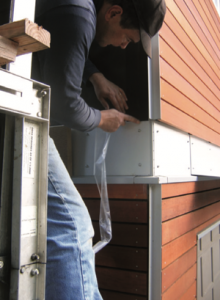
With taped sheathing WRB systems, seam tape is not optional—it is structural to the performance of the assembly.
Seams rely on tape to maintain:
-
water control continuity
-
air barrier continuity
Tape performance can be compromised when applied over:
-
dusty panel surfaces
-
wet substrates
-
cold conditions
-
misaligned seams
-
edges that aren’t properly rolled
The common misconception is that tape “either sticks or doesn’t.” In reality, the risk is often a slower, harder-to-detect issue that can appear later through:
-
localized leaks
-
recurring moisture at seams
-
staining at interior finishes
-
dampness around openings and transitions
In the Pacific Northwest, tape installation is one of the highest leverage details on the whole project.
Key Risk #3: Fastener Penetrations Add Up Over the Whole House
During framing, a home may accumulate thousands of penetrations through the exterior sheathing layer, including:
-
nails
-
staples
-
temporary attachments
-
fasteners at edges and blocking
Even when a WRB surface is designed to shed water, repeated penetrations create points where moisture can interact with the assembly over time.
This becomes more important in wet climates because:
-
water exposure is frequent
-
drying time is limited
-
small imperfections can compound
This isn’t meant as a criticism of panel systems—it’s simply the reality of how large wall assemblies behave in real-world conditions.
Key Risk #4: “Temporary Exposure” During Construction Can Become Real Weathering
Many high-performance sheathing + tape systems have exposure limits, but jobsite conditions can extend schedules due to:
-
weather delays
-
permitting changes
-
material lead times
-
trade coordination gaps
The longer the wall assembly is exposed, the higher the risk of:
-
seam movement
-
tape adhesion reduction
-
moisture cycling at panel edges
-
corner and opening damage
Even well-designed assemblies can underperform when treated as the final line of defense for too long without additional protection and sequencing.
Key Risk #5: Exterior Insulation Changes the Drying Behavior of the Wall
This is one of the most important issues in the Pacific Northwest.
Continuous exterior insulation can be an excellent upgrade for:
-
energy performance
-
comfort
-
condensation control
-
thermal bridging reduction
However, once insulation is installed over the sheathing/WRB layer, the wall becomes more sensitive to detailing because:
-
the WRB layer is now more buried
-
outward drying behavior changes
-
water that gets in may stay longer
If the taped sheathing WRB layer has even small air or water leaks at seams or penetrations, moisture can become trapped behind insulation and cladding assemblies—creating conditions where rot develops without obvious exterior warning signs.
In other words:
Once exterior insulation is installed, the tolerance for WRB imperfections decreases significantly.
Key Risk #6: Fastening Through Insulation Creates Additional Penetrations and Complexity
When continuous exterior insulation is installed, cladding often requires:
-
furring strips
-
long fasteners
-
standoffs or attachment systems
That adds complexity because:
-
new penetrations pass through layers
-
compression can vary across the wall
-
transitions become harder to detail cleanly
-
correcting issues later becomes far more difficult
This is where “good enough” installation standards can create long-term risk—particularly in rainy coastal environments.
A Better Approach: Use a WRB Strategy Designed for Exterior Insulation + Rainscreen Assemblies
For wall assemblies that include exterior insulation or complex cladding attachments, many high-performance builders prefer WRB solutions designed specifically to support:
-
long-term water management
-
strong sealing at transitions
-
better integration with rainscreens
-
durability around fastener penetrations
Some manufacturers (including ZIP System®) also offer dedicated WRB solutions beyond panel seams and tape. These can provide a more resilient approach for certain assemblies—but they still require attentive installation to perform as intended.
The major takeaway is:
✅ Better WRB strategies exist for these assemblies
✅ But they require correct sequencing and skilled detailing
✅ Long-term performance depends on execution, not branding
Why Installation Quality Matters More Than Product Choice
High-performance exterior systems succeed or fail at details like:
-
seam prep and rolling
-
clean, dry substrate conditions
-
correct lapping/shingling strategy
-
transitions at corners and openings
-
window and door integration
-
penetrations and termination detailing
The weakest points are almost never the big flat wall.
They’re the transitions—where water concentrates and workmanship matters most.
In Seattle’s climate, that difference shows up later as either:
-
durable performance for decades
or -
avoidable moisture damage hidden behind the cladding
Final Thoughts
Taped sheathing WRB systems can be an excellent part of a Pacific Northwest exterior envelope when installed correctly. The risk comes from relying on any sheathing-based WRB as if it replaces a full rainscreen and moisture management strategy—especially when continuous exterior insulation will be installed over the assembly.
In Seattle-area builds, long-term durability depends on:
-
continuity of the air and water barrier
-
careful seam and penetration detailing
-
thoughtful drainage and drying strategy
-
precise integration at windows and transitions
When homeowners and builders treat the exterior envelope as a complete system, performance improves dramatically—and costly hidden moisture failures become far less likely.
FAQ: Taped Sheathing WRB Systems, Rainscreens, and Exterior Insulation
Is taped structural sheathing considered a WRB?
Yes. Many taped sheathing systems are designed to serve as a water-resistive barrier (WRB) when seams and penetrations are properly detailed. Performance depends heavily on correct installation and continuity.
Is a taped sheathing WRB the same thing as a rainscreen?
No. A WRB is a water-control layer, while a rainscreen is a drainage and drying space behind the cladding. In Seattle’s wet climate, rainscreens help reduce trapped moisture and extend siding lifespan.
Do fastener penetrations matter in WRB performance?
They can. Large wall assemblies include thousands of fasteners, and while WRB systems are designed to handle this, overall performance still depends on careful seam detailing, transition management, and long-term drying potential.
Why does exterior insulation make WRB details more important?
Continuous exterior insulation changes how a wall dries and can reduce outward drying potential. That means small WRB gaps or seam issues can become more consequential because moisture may stay trapped longer behind insulation and cladding.
What should homeowners ask a contractor about WRB and insulation assemblies?
Homeowners should ask how the wall will manage water behind the cladding, how seams and transitions will be detailed, whether a drainage gap or rainscreen will be used, and how window and penetration flashing will integrate with the WRB.
Back to Exterior Remodeling Resources