Full House Exterior Remodel Case Study: Madison Park
What a Passive House Exterior Teaches Seattle Homeowners About Moisture Control, Durability, and Long-Term Performance
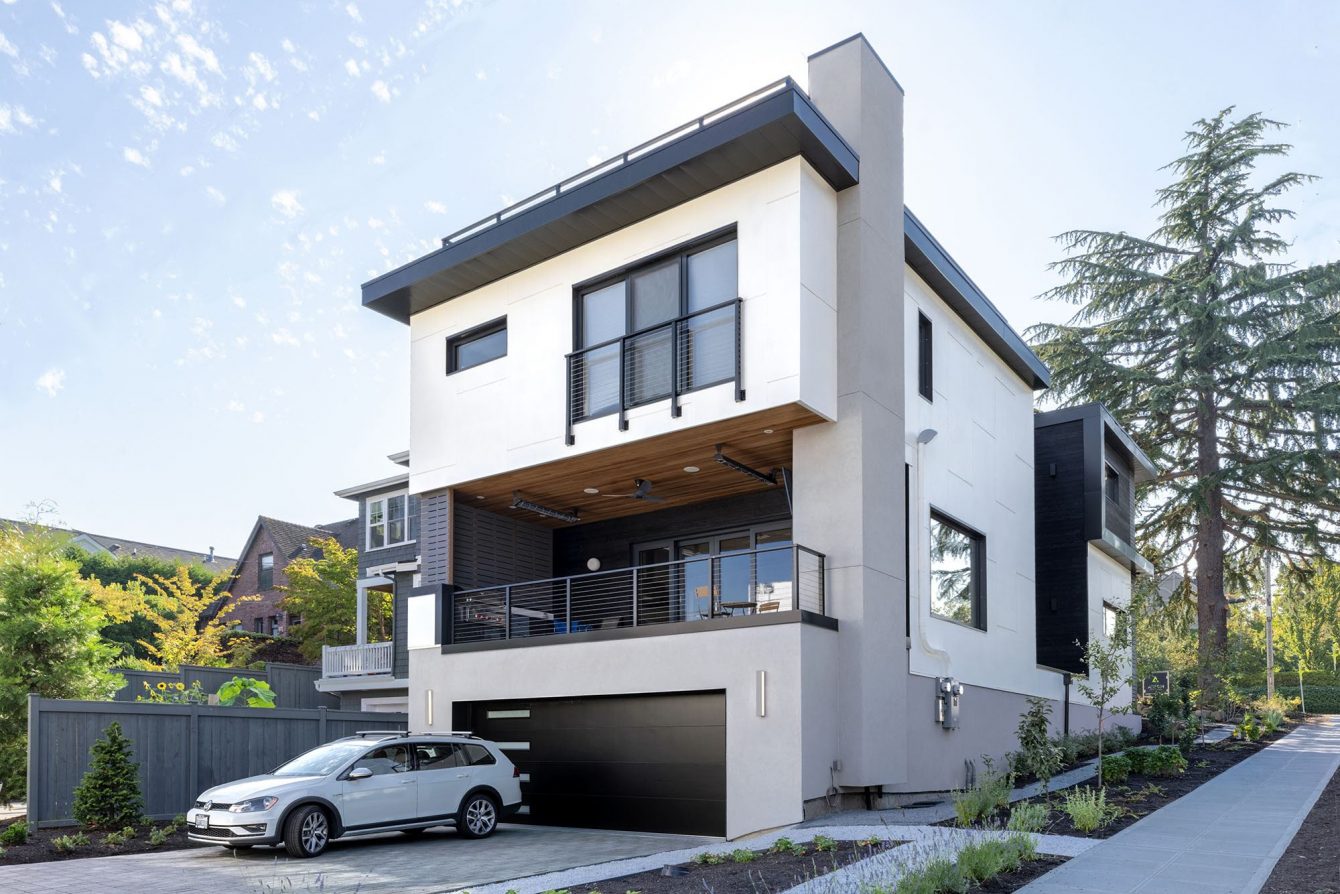
Homes in Seattle’s Madison Park neighborhood face some of the most demanding exterior conditions in the region. Proximity to water, frequent wind-driven rain, and limited drying time place constant stress on siding, windows, and wall assemblies. In these environments, exterior performance is not optional—it is foundational to long-term durability.
This case study examines a Madison Park residence built to Passive House performance standards and explains what its exterior envelope construction can teach homeowners planning siding, window, or full exterior remodel projects in the Pacific Northwest.
Why This Project Matters for Seattle Homeowners
While not every home is built to Passive House standards, the principles behind high-performance exterior envelopes apply to all Seattle homes.
This project is valuable as a learning example because it:
-
Is located in a high-moisture, near-water environment
-
Prioritizes long-term durability over short-term solutions
-
Demonstrates best practices for managing water, air, and thermal control
-
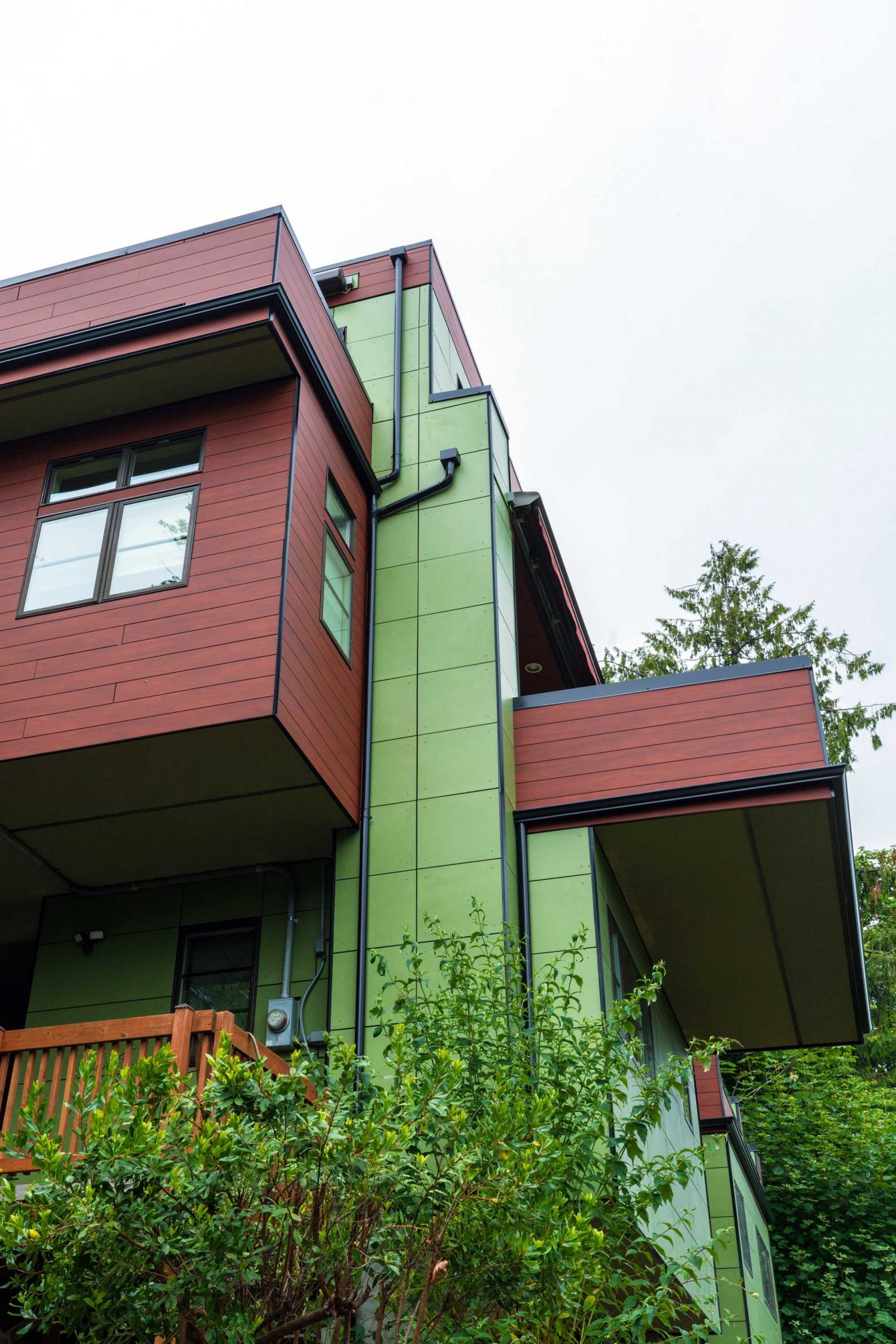
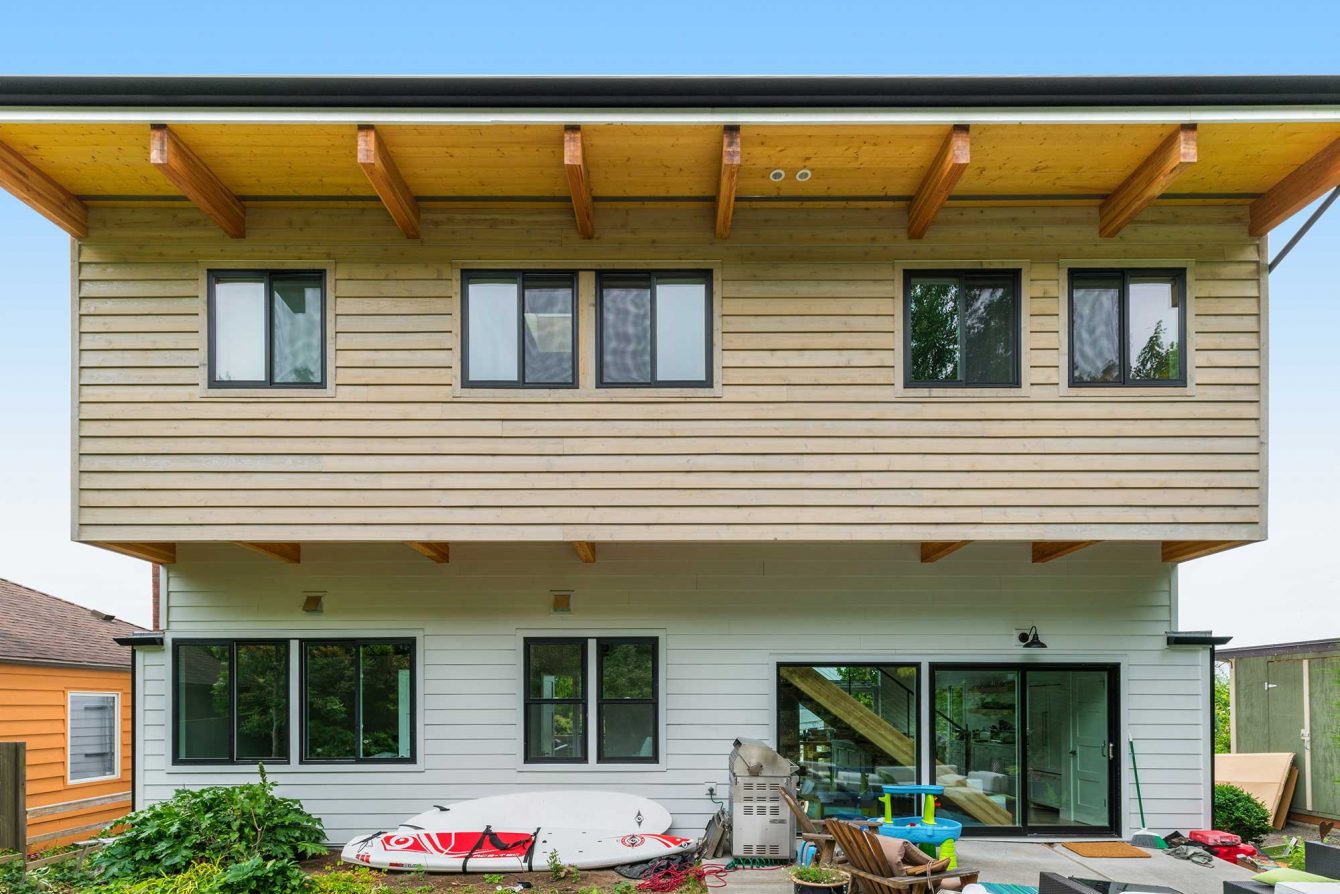
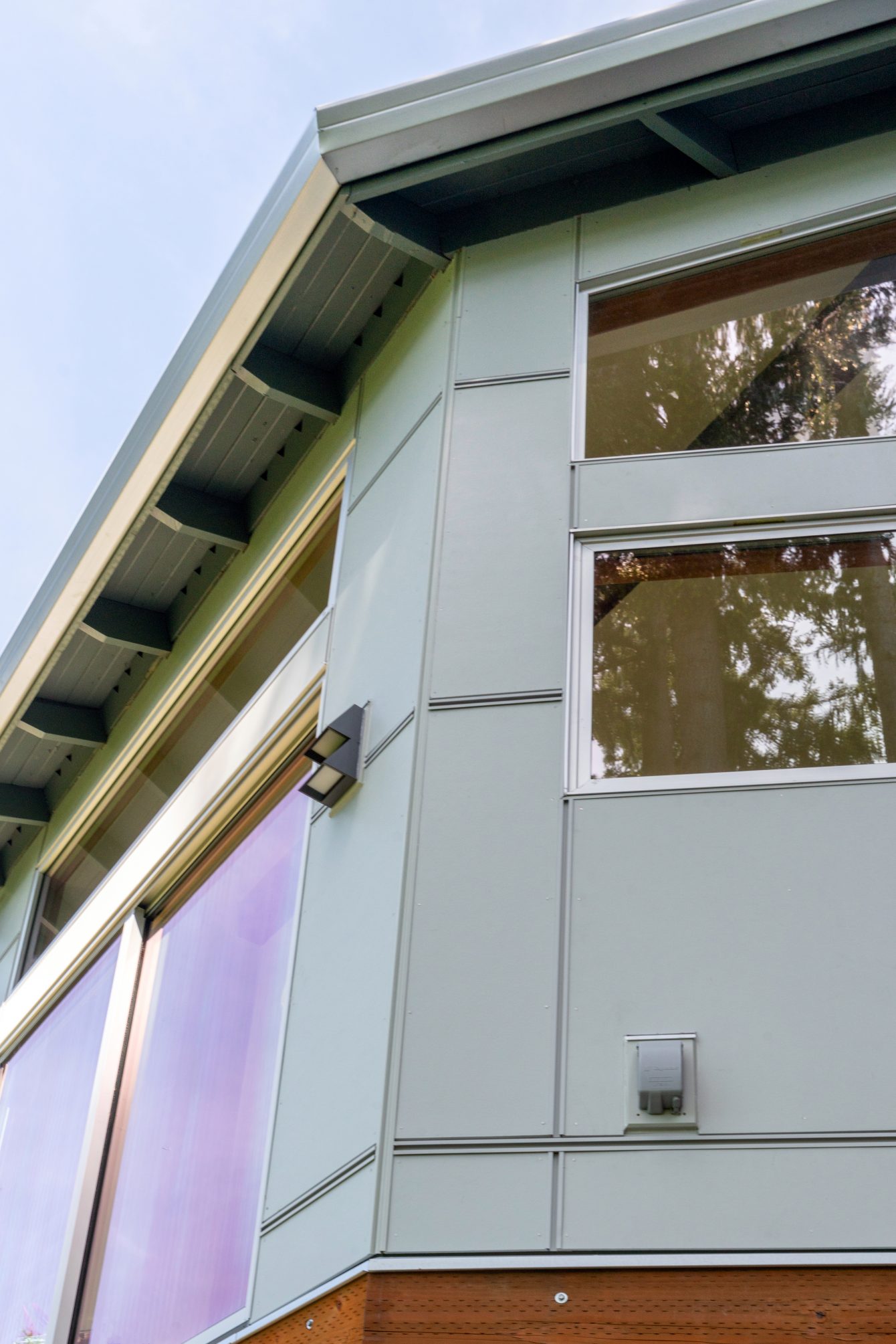
Uses materials common in Seattle remodeling projects, including James Hardie siding
Rather than focusing on certification, this case study focuses on what homeowners can learn and apply, regardless of project size or budget.
The Core Challenge: Managing Moisture in a Coastal Neighborhood
In wet coastal neighborhoods like Madison Park, the primary risk to homes is not visible rain—it is water intrusion behind exterior finishes.
Common issues in this area include:
-
Moisture entering at window and panel transitions
-
Trapped water behind siding
-
Inadequate drying potential in shaded elevations
-
Long-term rot developing unseen within wall assemblies
This project approached the exterior envelope with the assumption that water will reach the wall assembly, and that the system must be designed to manage it safely.
Exterior Envelope Strategy: Building From the Inside Out
The exterior envelope was designed as a continuous system responsible for:
-
Controlling bulk water
-
Managing air leakage
-
Supporting long-term material durability
Key envelope principles used:
-
Continuous weather-resistive barrier (WRB)
-
Carefully detailed transitions at all joints and penetrations
-
Precise sequencing of layers to prevent trapped moisture
-
Integration of cladding systems with the underlying control layers
For homeowners, the key takeaway is that siding alone does not protect a home. Performance depends on how all exterior layers work together.
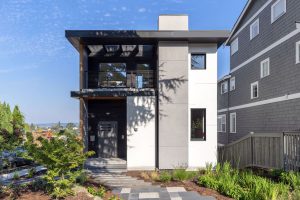
Siding and Cladding Materials: Why These Choices Matter
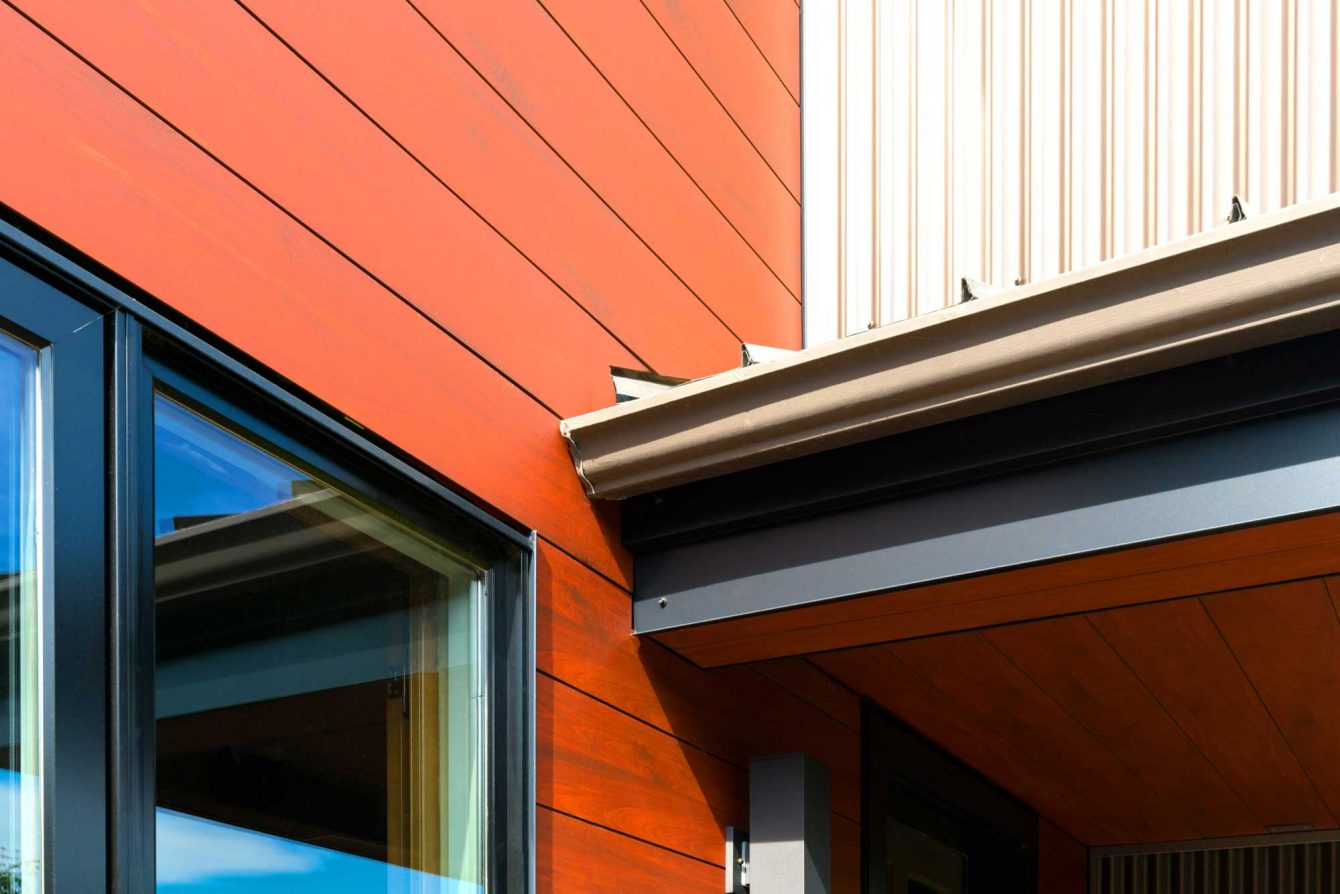
James Hardie® Fiber Cement Panel Siding
James Hardie panel siding was selected for its:
-
Dimensional stability in wet conditions
-
Resistance to rot and insect damage
-
Compatibility with modern rainscreen and panelized systems
-
Long-term performance in Pacific Northwest climates
While this project used a panel system for architectural reasons, the underlying lesson applies to lap siding as well: fiber cement performs reliably when moisture is properly managed behind it.
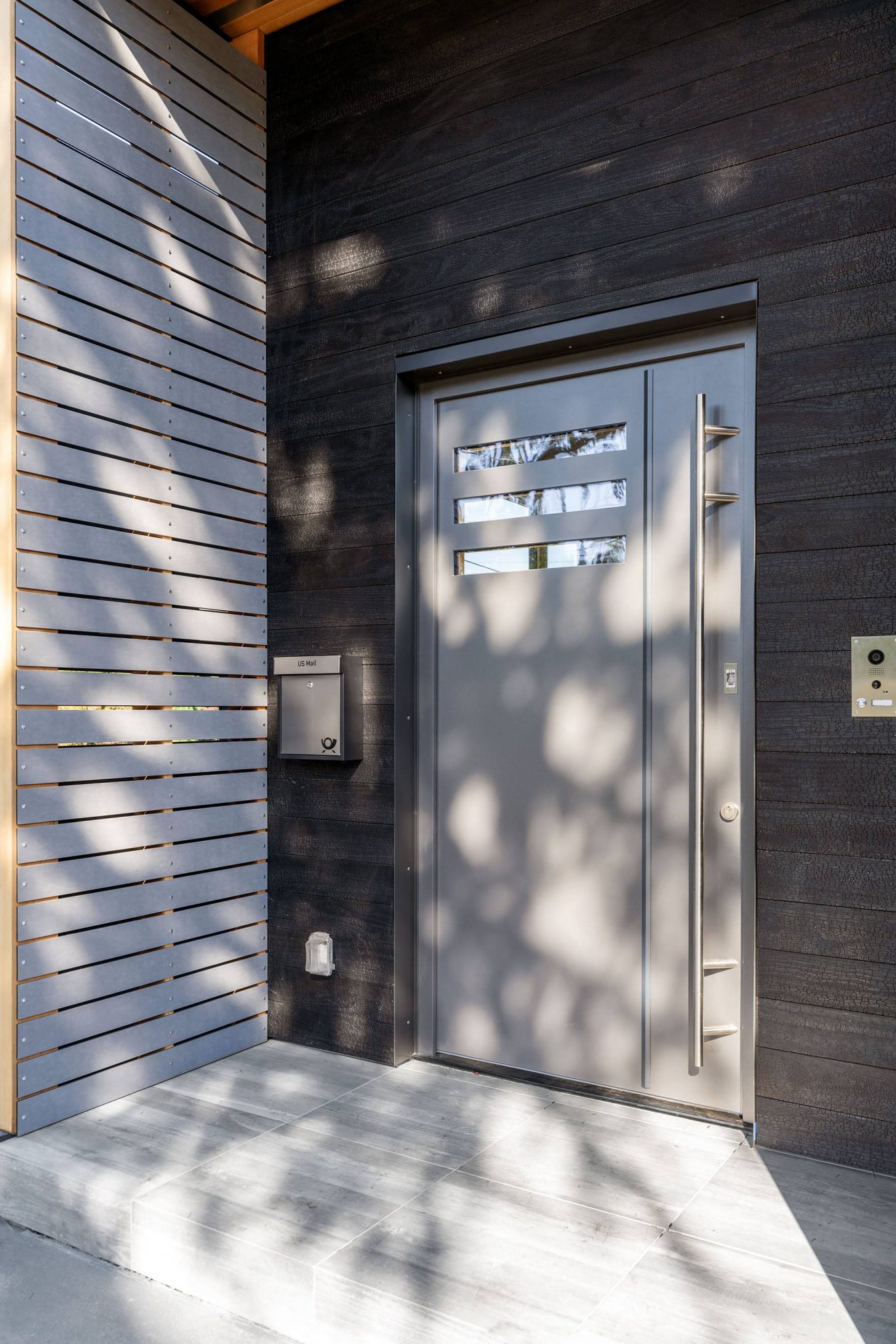
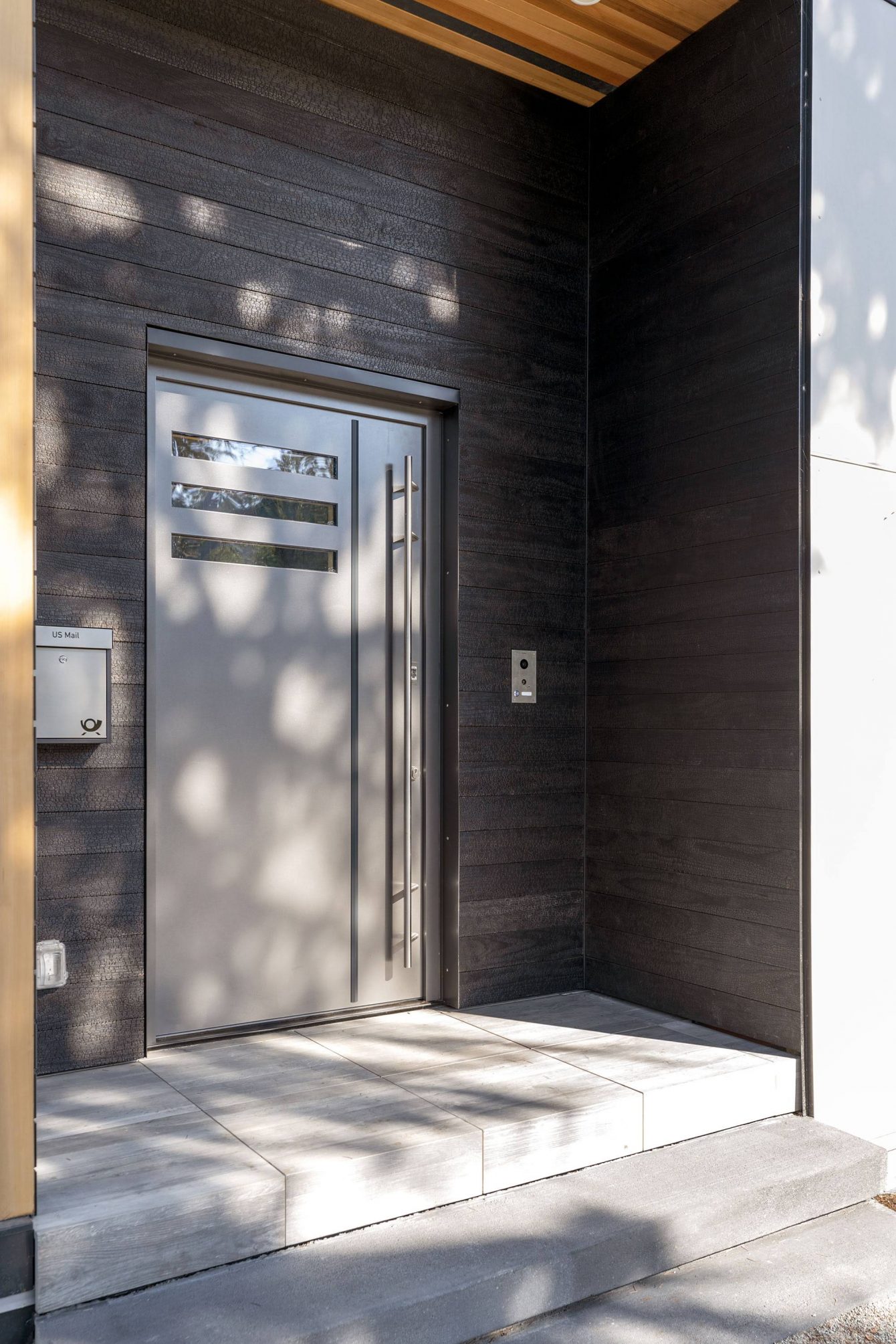
Shou Sugi Ban (Charred Wood) Cladding
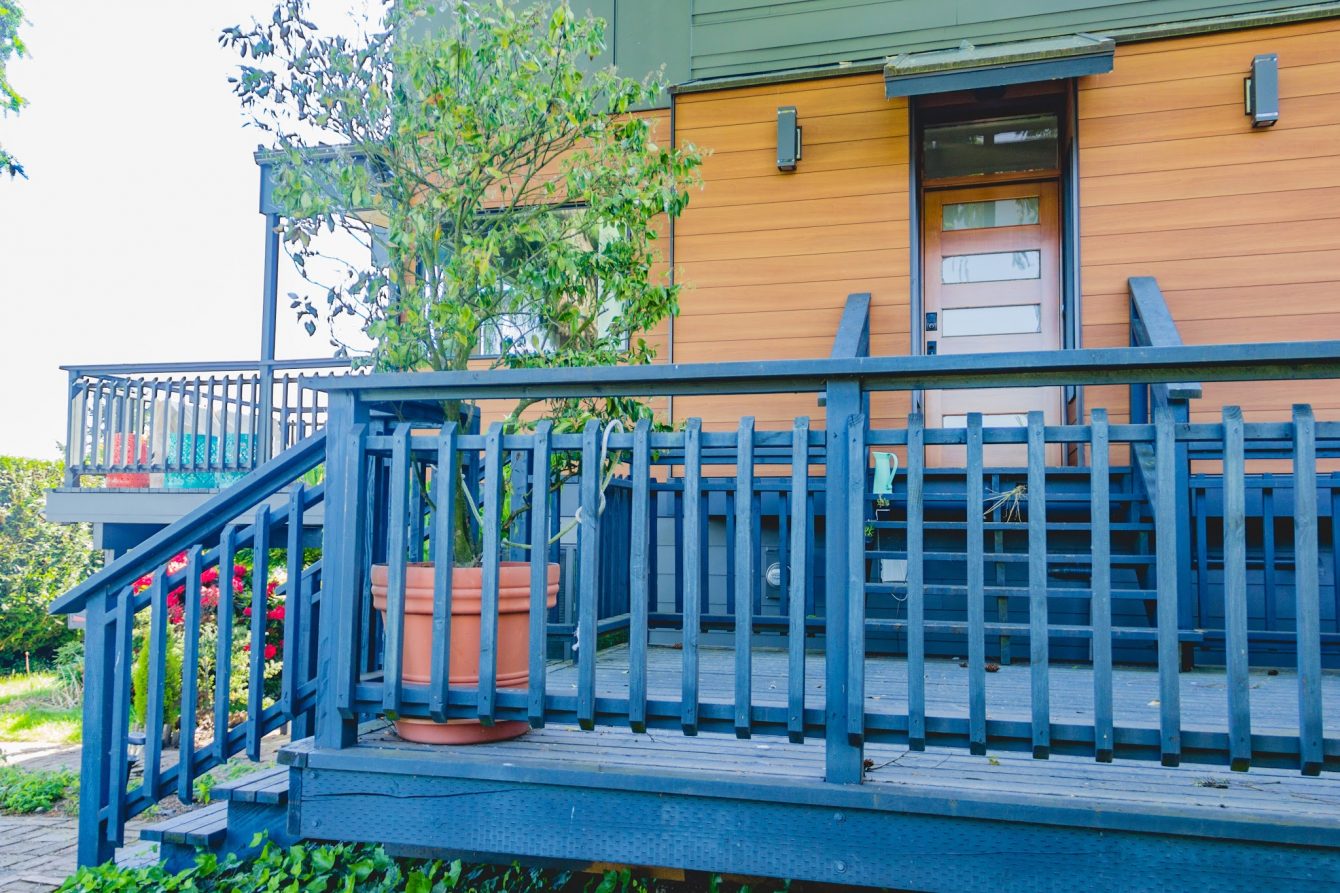
Shou Sugi Ban was used selectively as an accent material to introduce texture and warmth.
Key considerations for homeowners:
-
Even rot-resistant wood benefits from proper detailing
-
Accent materials should be integrated thoughtfully, not treated as isolated features
-
Durable finishes still rely on good drainage and ventilation
Precision Detailing: Why Installation Quality Matters More Than Materials
One of the most important lessons from this project is that installation quality often matters more than material choice.
This exterior required:
-
Exact alignment at panel joints
-
Careful detailing at corners and transitions
-
Continuous attention to sealing and flashing
-
Coordination between trades to protect the envelope at every stage
For Seattle homeowners, this reinforces why contractor experience with wet-climate construction is critical.
Related resource:
How to Choose the Right Contractor for an Exterior Remodel
What Passive House Construction Teaches Even Non–Passive House Homes
While Passive House standards exceed what most residential remodels require, they highlight principles that benefit every home:
-
Airtight assemblies reduce moisture movement
-
Continuous WRBs protect framing from repeated wetting
-
Precision detailing reduces future maintenance
-
Thoughtful material selection extends siding lifespan
Homeowners do not need to pursue certification to benefit from these strategies.
Lessons Homeowners Can Apply to Any Exterior Remodel
This project highlights several takeaways relevant to all Seattle-area homes:
-
Moisture control should drive design decisions
-
Rainscreens and drainage gaps extend siding life
-
Window and siding integration is critical
-
High-performance detailing reduces long-term repair costs
-
The exterior envelope should be planned as a system
These lessons apply whether a project involves fiber cement, vinyl, wood, or composite materials.
Outcome: Durability, Performance, and Longevity
The completed Madison Park home demonstrates how:
-
Modern materials
-
Careful installation
-
Performance-driven design
…can work together to create an exterior that is durable, low-maintenance, and well-suited to Seattle’s climate.
The result is not just an efficient home, but one designed to withstand decades of moisture exposure with minimal risk of hidden damage.
Final Thoughts
This Madison Park project represents the high end of exterior envelope performance, but its value as a case study lies in the lessons it offers everyday homeowners. By applying even a portion of these principles—better waterproofing, improved detailing, and climate-appropriate materials—Seattle homeowners can significantly improve the durability of their exterior remodels.