Top Mistakes Homeowners Make When Replacing Siding
A Seattle Homeowner’s Guide to Avoiding Costly Errors in Wet Coastal Climates
Replacing siding is one of the biggest exterior investments a homeowner can make. In Seattle and the Pacific Northwest, it’s also one of the most important protective upgrades—because siding plays a direct role in moisture control, long-term durability, and preventing rot behind the walls.
The challenge is that siding replacement can go wrong even when homeowners choose high-quality materials. In rainy coastal climates, most problems aren’t caused by the siding itself—they’re caused by missed waterproofing details, poor sequencing, or decisions that don’t account for how moisture behaves in Seattle homes.
This guide outlines the most common mistakes homeowners make when replacing siding, why they matter, and what to do instead.
Why Siding Replacement Mistakes Matter More in Seattle
Seattle’s exterior conditions are demanding. Wind-driven rain, cool temperatures, and limited drying time make it easier for moisture to linger inside wall assemblies. That means small errors in detailing can lead to larger issues over time, including:
-
Hidden sheathing rot
-
Mold and mildew buildup behind siding
-
Premature paint failure
-
Window leaks and interior staining
-
Higher repair costs later
Siding replacement isn’t just a cosmetic upgrade—it’s a moisture management project.
Mistake #1: Choosing Siding Based on Looks Alone
Many homeowners choose siding primarily for appearance, without fully considering maintenance requirements or wet-climate performance.
In Seattle, siding should be selected based on:
-
moisture resistance
-
dimensional stability
-
long-term maintenance expectations
-
compatibility with proper drainage strategies
A material that performs well in a dry climate may struggle in the Pacific Northwest without additional detailing and ongoing care.
Related resources:
Best Siding Materials for Seattle’s Wet Climate
James Hardie vs. Vinyl: What’s Better for Pacific Northwest Homes?
Mistake #2: Skipping a Rainscreen or Drainage Gap
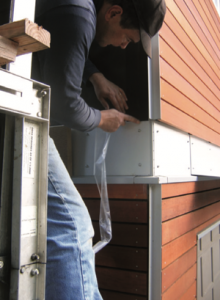
One of the most common siding replacement mistakes in wet climates is installing siding directly against the wall with no drainage space.
In modern exterior systems, siding is not expected to be fully waterproof. A rainscreen or drainage gap helps by allowing:
-
water to drain behind the cladding
-
airflow to dry trapped moisture
-
reduced risk of rot and mold
In Seattle, this detail can significantly increase siding lifespan and reduce long-term moisture issues.
Mistake #3: Reusing Old Flashing or Not Upgrading It
Flashing is one of the most important elements of any siding project. It directs water away from vulnerable areas like:
-
windows and doors
-
roof intersections
-
ledger boards and decks
-
penetrations and transitions
Reusing old flashing—or failing to correct outdated methods—can allow water intrusion behind brand-new siding.
Many “siding problems” are actually flashing problems that were never properly addressed.
Mistake #4: Ignoring Window Integration
Windows and siding must work as one system. Even if the windows are not being replaced, siding replacement should include careful integration of:
-
WRB continuity
-
head flashing
-
sill management
-
trim and sealant strategy
In Seattle, window-to-wall transitions are one of the most common locations for hidden rot.
Related resource:
When to Repair vs Replace Windows in Seattle Homes
Mistake #5: Not Planning for Hidden Rot or Sheathing Repairs
In Seattle-area homes, it is common to discover rot once the old siding comes off—especially around:
-
windows and doors
-
lower walls near grade
-
roof intersections
-
older trim assemblies
A major mistake is assuming the project scope ends with “new siding installed.”
Responsible planning includes:
-
acknowledging rot repair may be necessary
-
having a clear process for repairs
-
understanding how repairs affect budget and timeline
Rot isn’t a rare surprise in the PNW—it’s a normal risk that should be planned for.
Mistake #6: Focusing on Lowest Price Instead of Scope
Siding bids can vary widely. The lowest price is often missing key components, such as:
-
new WRB installation
-
flashing upgrades
-
rainscreen or drainage strategy
-
trim replacement
-
rot repair plan
-
permits or inspection coordination
In Seattle, the success of siding replacement is determined by what happens behind the siding—not just what is visible from the street.
Homeowners should compare bids based on:
-
scope clarity
-
moisture management approach
-
materials and detailing
-
experience with wet-climate assemblies
Related resource:
How to Choose the Right Contractor for an Exterior Remodel
Mistake #7: Underestimating Long-Term Maintenance
Some siding materials require more regular upkeep than homeowners expect, especially in rainy climates.
Common issues include:
-
mildew or algae staining
-
caulk joints failing over time
-
paint wearing faster on exposed elevations
-
localized damage that spreads when ignored
Choosing a siding system should include understanding realistic long-term maintenance expectations.
Related resource:
Siding Maintenance in Rainy Climates
Mistake #8: Treating Siding as a Standalone Upgrade
Siding replacement affects—and is affected by—other exterior systems, including:
-
windows and doors
-
rooflines and gutters
-
decks and ledger boards
-
ventilation and drainage at grade
When siding is replaced without addressing these connections, long-term performance often suffers.
A well-planned exterior project treats the home as a complete envelope system, not a collection of separate upgrades.
How to Avoid These Mistakes
Seattle homeowners can improve siding outcomes by:
-
choosing materials proven for wet climates
-
prioritizing flashing, WRB continuity, and drainage
-
planning for rot repair possibilities
-
comparing bids based on scope—not just price
-
hiring contractors experienced with Pacific Northwest detailing
In rainy coastal environments, siding replacement succeeds when moisture is managed intentionally at every transition.
Final Thoughts
Replacing siding is a major upgrade—especially in Seattle, where moisture and durability are constant concerns. The best siding projects don’t just refresh the home’s exterior appearance. They improve long-term performance by combining good materials with strong waterproofing strategy and high-quality installation.
Avoiding the most common mistakes helps ensure your siding investment protects your home for decades.
FAQ: Siding Replacement Mistakes in Seattle
What is the biggest mistake when replacing siding in Seattle?
One of the biggest mistakes is skipping moisture management details like flashing, WRB continuity, and drainage gaps, which are critical in rainy climates.
Do I need a rainscreen system when replacing siding?
In many Seattle homes, yes. Rainscreens help water drain and allow walls to dry, reducing the risk of trapped moisture and rot.
Should I replace windows when replacing siding?
Not always, but siding replacement is often the best time to address window flashing, trim, and waterproofing details to prevent leaks.
Why do siding replacement bids vary so much?
Price differences often come from scope differences. Some bids exclude key items like WRB replacement, flashing upgrades, rot repair plans, or permit coordination.
Return to Exterior Remodeling Resources